Understanding the purpose of an attendance early warning system
Last updated: June 29, 2026
Why do we need an attendance early warning system?
Consistent attendance for students is connected to higher academic achievement, positive social-emotional outcomes, and decreased risk for dropping out. Simply put, schools can only educate and support students to their fullest potential when students are present each day.
The attendance data displayed in Panorama Student Success are intended to deliver near real-time student-level data to assist in finding students at risk, spotting trends, triangulating with other relevant data including grades, assessment results and behavior data.
There are many reasons why students are absent from school, and different strategies to help students attend regularly. The first step is to monitor attendance data. The goal is to intervene early before students become chronically absent. Some responses to attendance issues are individual, but patterns of attendance data may indicate opportunities for systems-level responses that could improve overall attendance.
Learn more about all of the attendance/absenteeism reports in Student Success: Overview of Attendance Reports Available in Student Success
Not part of accountability or legislation
Although all of the attendance information comes from the same student information system data entry for attendance, the attendance reports in Student Success are not used to calculate the Iowa School Performance Profile (ISPP) absenteeism values, nor are they part of tracking/reporting for Senate File 2435. The reports in Student Success are intended as tools to support tracking and responding to attendance needs for overall student success. Using the data in Student Success to help improve student attendance will have a positive impact on chronic absenteeism calculations and truancy data.
Attendance risk thresholds
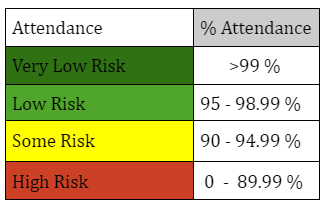
Attendance thresholds provide a quick view of a student’s status based on their attendance. This can help you determine which students are at risk of becoming chronically absent so you can intervene early. It is important to note that the attendance data in Student Success is intended as a tool for looking at potential attendance issues and is not directly connected to any other attendance reporting or accountability. Because this data is based on raw, next day data, the data reported may not match up exactly with other data summaries. For more information about risk threshold data click here.
System-level thresholds represent the percentage of students who are on track (in other words at low risk or very low risk) in attendance for the selected school year.
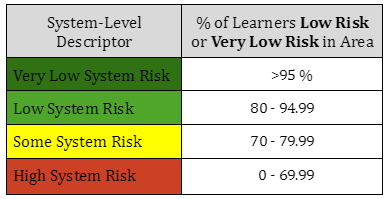
Student-level thresholds indicate the predicted risk level for each student’s attendance based on the most recent data from the SIS.